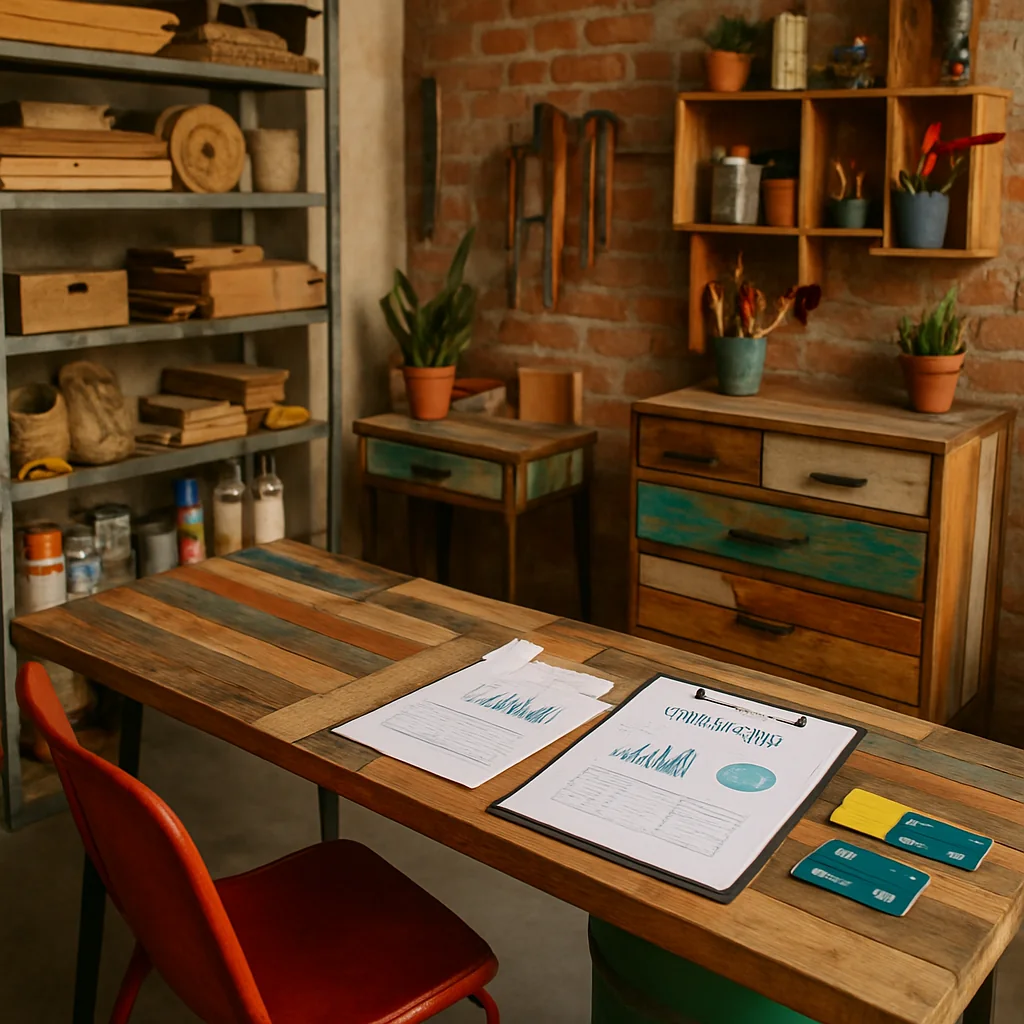
Did you know that over 70% of small businesses rely on credit cards to fuel their growth?
This statistic highlights the pivotal role that financial tools play in the burgeoning field of upcycled furniture design.
In a world increasingly focused on sustainability, understanding how credit cards and banks can empower entrepreneurs in this niche is essential.
In this article, we will explore the various strategies for generating side income and making impactful investments that can transform repurposed materials into unique home goods, while also scaling circular craft markets globally.
Understanding Credit Cards and Banks in Upcycled Furniture Entrepreneurship
The role of financial backing is crucial for entrepreneurs in the upcycled furniture industry.
Access to credit can
Access to credit can make a significant difference in starting and scaling a business that repurposes materials into unique home goods.
Many entrepreneurs face initial hurdles such as purchasing tools, renting workspace, or acquiring raw materials.
Here, credit cards become invaluable.
For instance, a small business owner may use a credit card to buy a bulk of reclaimed wood, which can be transformed into stylish furniture pieces.
This strategy not only helps mitigate cash flow issues but also allows for immediate investment in inventory.
Moreover, credit cards offer
Moreover, credit cards offer flexibility in managing expenses.
Entrepreneurs can make purchases and then take advantage of the grace period to repay without incurring interest.
This aspect is particularly beneficial for those operating in seasonal markets, where sales may fluctuate.
For example, using a credit card to cover upfront costs during a slow season can ensure that the business remains operational while awaiting a surge in demand.
Additionally, many credit cards offer rewards programs that can further assist entrepreneurs in earning back a percentage on their purchases, which can be reinvested into the business.
Furthermore, banks often provide resources and support tailored to small businesses.
Entrepreneurs in the upcycled furniture sector can benefit from specialized loans or lines of credit designed to facilitate growth.
As these businesses scale, accessing additional funding becomes essential.
For those looking to expand their operations or invest in marketing, establishing a solid relationship with a bank can lead to favorable terms and conditions.
In conclusion, understanding the financial landscape, including the use of credit cards and banking options, is essential for entrepreneurs in the upcycled furniture market.
By leveraging these financial tools wisely, they can ensure sustainable growth and contribute to a larger movement towards circular economies.
Leveraging Credit Cards for Side Income in Upcycled Furniture Design
Credit cards can serve as a powerful tool for entrepreneurs in the upcycled furniture design sector. By strategically utilizing credit card rewards, individuals can effectively fund their material purchases and essential tools needed for their creative projects.
For instance, many credit cards offer rewards points for every dollar spent.
An entrepreneur focusing on upcycled furniture can accumulate these points by purchasing reclaimed wood, paint, or tools through their card.
Over time, these rewards can translate into significant savings, allowing for reinvestment into the business.
Specifically, using a card that offers cash back on home improvement purchases can lead to up to 5% savings on materials, which can be substantial when scaling operations.
However, it is crucial to manage debt and cash flow effectively. Keeping track of expenses and ensuring timely payments helps avoid high interest rates that can quickly accumulate.
For instance, if an entrepreneur spends $1,000 on materials and only pays the minimum balance, they could end up paying significantly more due to interest.
Therefore, establishing a budget that allows for prompt payments is vital to maintaining financial health.
Moreover, understanding the nuances of credit utilization can also aid in building a strong credit score, which is essential for future investment opportunities.
By keeping the credit utilization ratio below 30%, entrepreneurs can enhance their creditworthiness, making it easier to secure loans as their business grows.
In conclusion, leveraging credit cards wisely can provide upcycled furniture entrepreneurs with the financial flexibility necessary to innovate and expand their ventures.
For those interested in maximizing their financial strategies, exploring additional resources such as credit card hacks for profitable side hustles may prove beneficial.
Investment Strategies for Upcycled Furniture Businesses
Investing in upcycled furniture businesses requires a strategic approach. Entrepreneurs need to consider various types of investments that can help them grow their operations and maximize profits.
One effective strategy involves leveraging small business loans provided by banks, which can offer the necessary capital for purchasing materials, tools, and marketing efforts.
For instance, a small loan can enable a business owner to buy reclaimed wood or vintage furniture pieces that can be transformed into unique custom home goods.
These investments not only enhance the product offerings but also align with the sustainable values of many consumers today.
Furthermore, banks often provide resources and guidance on how to effectively manage these loans, making them valuable partners in this entrepreneurial journey.
Moreover, entrepreneurs should also explore equity investments, where they can bring in investors who are interested in the mission of sustainability.
This approach can provide not only funding but also strategic guidance and networks that are crucial for scaling the business.
By combining these investment strategies, upcycled furniture entrepreneurs can create a solid foundation for their business while contributing to the circular craft market.
Ultimately, understanding the different types of investments available and how banks can assist with loans is essential for success.
Entrepreneurs must actively seek out these opportunities to ensure their businesses thrive in an increasingly competitive landscape.
Building a Sustainable Business Model in Circular Craft Markets
Creating a sustainable business model is essential for entrepreneurs in the upcycled furniture sector, particularly as the demand for eco-friendly products continues to rise.
The principles of sustainable design in furniture making focus on minimizing waste and maximizing resource efficiency.
For example, using reclaimed wood not only reduces the need for new materials but also adds unique character to each piece.
This approach is not just environmentally friendly; it can also attract a dedicated customer base that values sustainability.
Furthermore, financial institutions are increasingly supporting sustainable practices through tailored financing options.
Many banks offer green loans specifically designed for businesses that focus on sustainable products.
These loans often come with lower interest rates, making it easier for entrepreneurs to invest in quality materials and innovative designs.
By leveraging credit cards that provide rewards for sustainable purchases, business owners can further enhance their cash flow while reinforcing their commitment to eco-friendly practices.
In conclusion, a sustainable business model in circular craft markets not only contributes to environmental preservation but also positions upcycled furniture entrepreneurs for long-term success.
By aligning financial strategies with sustainable goals, these businesses can thrive in a competitive marketplace.
For further insights on financing options, consider exploring Credit Cards and Banks in Mycelium Packaging for E-commerce Brands.
Scaling Your Upcycled Furniture Business Globally
Expanding your upcycled furniture business to international markets can significantly enhance your revenue potential. Identifying opportunities in different countries is essential for growth.
For instance, countries with a strong emphasis on sustainability, such as Sweden or Germany, often show a high demand for upcycled goods.
Researching local trends can help you tailor your products to fit these markets.
Moreover, utilizing e-commerce platforms is crucial for reaching global customers.
Websites like Etsy or Amazon Handmade provide the perfect avenue for showcasing your unique pieces to a wide audience.
By setting up a well-optimized online store, you can leverage social media marketing to direct traffic to your listings.
For example, showcasing your furniture on Instagram can attract international buyers who value handcrafted, sustainable items.
Statistics show that e-commerce sales are expected to surpass $6 trillion by 2024, indicating a vast opportunity for entrepreneurs.
Additionally, you can use your credit cards strategically to manage supply costs and shipping fees, ensuring that your business remains profitable as you scale.
Investing wisely in these areas will help establish your brand globally.
In conclusion, expanding your upcycled furniture business internationally requires strategic planning and effective use of digital tools.
By focusing on market opportunities and employing e-commerce strategies, you can build a thriving global presence.
Conclusion
Throughout this article, we delved into the pivotal role of credit cards and banks in the entrepreneurship of upcycled furniture design.
You now understand how leveraging financial tools can enhance your side income strategies and investments, enabling you to successfully repurpose materials into stunning custom home goods.
It’s time to take action: assess your financial options today and explore how credit can fuel your creative ventures.
By embracing these strategies, you are not just building a business; you are contributing to a sustainable future in circular craft markets worldwide!