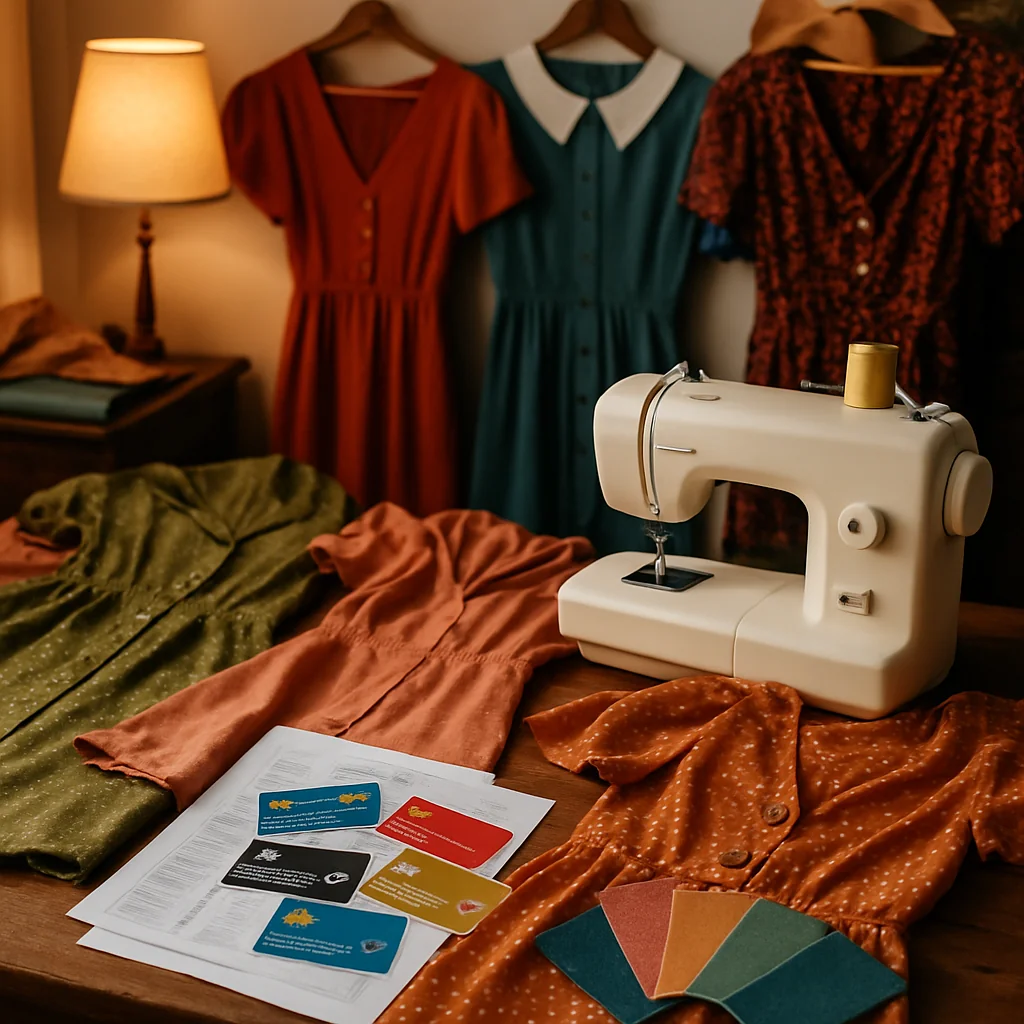
Did you know that over 60% of entrepreneurs start their businesses from home?
In today’s gig economy, launching a home-based vintage clothing upcycling and resale side hustle is not just a trend; it’s a lucrative opportunity waiting to be seized.
With the right use of credit cards and bank financing, you can transform your passion for vintage fashion into a profitable venture while maximizing your rewards points and building a diverse investment portfolio.
This article will guide you through step-by-step strategies to effectively utilize credit cards and secure loans, ensuring that your hustle not only thrives but also contributes to your everyday wealth growth.
Understanding Credit Cards for Vintage Clothing Business
Credit cards can be a game changer for your home-based vintage clothing upcycling and resale hustle. They offer various benefits that can help you manage costs, maximize rewards, and build a solid financial foundation for your business.
One of the primary
One of the primary advantages of using credit cards for business expenses is the ability to earn rewards points.
These points can accumulate quickly with regular purchases, allowing you to redeem them for travel, cash back, or even discounts on your next shopping spree for vintage finds.
For instance, if you frequently purchase supplies or inventory for your clothing business, using a credit card that offers bonus points in these categories can significantly enhance your rewards strategy.
When choosing the right
When choosing the right credit card, it’s essential to consider the specific rewards program that aligns with your business needs.
Look for cards that offer cash back on categories where you spend the most.
For example, a credit card that provides 5% cash back on online purchases can be incredibly beneficial when sourcing vintage clothing from online marketplaces.
Additionally, always review the card’s annual fees and interest rates to ensure they align with your business goals.
Understanding credit limits and interest rates is also crucial.
A higher credit limit allows for greater purchasing power, which is especially valuable when you find a bulk lot of vintage pieces.
However, remember that carrying a balance can lead to high interest charges, which can eat into your profits.
Always aim to pay off your balance in full each month to avoid interest and maximize your cash flow.
In conclusion, by effectively utilizing credit cards, you can not only streamline your business expenses but also create opportunities for wealth growth through strategic rewards accumulation.
As you build your vintage clothing business, consider these financial tools as essential to your success.
Securing Bank Financing for Your Home-Based Side Hustle
Securing bank financing can be a pivotal step in launching your home-based vintage clothing upcycling and resale side hustle.
A solid business plan is essential to present to potential lenders, as it showcases your vision, market analysis, and financial projections.
This comprehensive document not only helps you clarify your business objectives but also instills confidence in banks regarding your commitment and the viability of your venture.
When creating your business
When creating your business plan, ensure to include detailed sections on your target market and competitive analysis.
For instance, if you plan to focus on upcycled denim jackets, highlight trends in sustainable fashion and consumer preferences towards eco-friendly products.
Additionally, include projected costs and potential revenue streams to give lenders a clear picture of your financial outlook.
Remember, a well-prepared business plan can significantly enhance your chances of obtaining a loan.
Understanding the different types
Understanding the different types of loans available is crucial for selecting the right financing option for your side hustle.
You might explore traditional bank loans, Small Business Administration (SBA) loans, or even personal loans if they offer better terms.
Each type of loan has its requirements, interest rates, and repayment plans, so it’s vital to compare them.
For instance, SBA loans often have lower interest rates and longer repayment terms, which might be beneficial for new entrepreneurs.
Moreover, building a good credit score is essential to enhance your loan eligibility.
Banks typically assess your credit history to determine your reliability as a borrower.
To improve your score, pay off existing debts on time, keep credit card balances low, and avoid opening too many new accounts at once.
By taking these steps, you can position yourself favorably for financing options that will support your vintage clothing hustle.
In conclusion, securing bank financing requires careful planning and informed decision-making.
By preparing a solid business plan, understanding loan options, and building a strong credit profile, you will be better equipped to launch your home-based side hustle successfully.
For further insights, consider exploring Maximize Rewards with Credit Cards and Bank Financing for Your Home-Based Kombucha Brewing Side Hustle.
Maximizing Rewards Points for Resale Success
Maximizing rewards points is crucial for anyone looking to launch a home-based vintage clothing upcycling and resale side hustle.
First and foremost, it is essential to track your spending effectively.
By categorizing your purchases and monitoring where your money goes, you can identify which areas yield the most rewards.
For instance, using a credit card that offers bonus points on certain categories can significantly boost your rewards.
If your vintage clothing hustle primarily involves purchasing fabric and materials from craft stores, find a card that rewards these specific purchases.
Moreover, leveraging bonus categories is a smart strategy.
Many credit cards provide enhanced rewards during specific promotional periods or for particular types of businesses.
For example, if a card offers 5% back on clothing purchases for a limited time, consider stockpiling your supplies during that window.
This approach not only maximizes your rewards but also minimizes overall costs, allowing for greater investment in your side hustle.
When it comes to redeeming points, opt for options that directly benefit your business.
Use your points for essential business-related expenses, such as shipping costs or purchasing new inventory.
Additionally, consider transferring points to travel partners, which can provide deeper discounts or special deals, making it easier to attend vintage markets or trade shows.
This strategy can enhance your network and showcase your products to a broader audience.
In conclusion, by actively tracking spending, utilizing bonus categories, and redeeming points effectively, you can significantly enhance your vintage clothing business.
For further insights on maximizing rewards with credit cards, check out Maximizing Rewards and Financing for Your Herbal Tea Side Hustle.
These strategies will not only help you build a successful resale operation but also contribute to your overall wealth growth.
Building a Diversified Investment Portfolio for Wealth Growth
Establishing a diversified investment portfolio is crucial for anyone looking to enhance their wealth, especially those launching a home-based vintage clothing upcycling and resale side hustle. By reinvesting profits back into the business, entrepreneurs can not only grow their brand but also create a buffer against market volatility.
One effective strategy is to allocate a percentage of your profits to invest in other areas.
For example, consider using a portion of your earnings to purchase stocks or mutual funds.
This not only provides a potential return on investment but also helps build a safety net for your business.
Investing in different sectors can mitigate risks associated with relying solely on your clothing hustle.
Moreover, exploring additional investment opportunities such as real estate can offer long-term wealth growth.
Investing in rental properties or even flipping houses allows you to capitalize on your understanding of vintage markets.
For instance, if you spot a trend in vintage home decor, diversifying your portfolio to include related items could yield substantial returns.
However, it’s essential to understand the risks and benefits of diversification.
While spreading investments can reduce risk, it also requires careful management to ensure that you don’t dilute your focus.
A study by Vanguard indicated that a well-diversified portfolio can lead to a reduction in overall risk by 30% to 50%.
This emphasizes the importance of balancing your core business with additional ventures.
In conclusion, building a diversified investment portfolio not only fosters growth but also secures your financial future.
By reinvesting profits, exploring new opportunities, and understanding the dynamics of risk, you can effectively leverage your vintage clothing hustle for sustainable wealth.
Conclusion
Throughout this article, we’ve uncovered the essential strategies for leveraging credit cards and bank financing to launch your home-based vintage clothing upcycling and resale side hustle.
You now have the tools to maximize rewards points, secure essential loans, and build a diversified investment portfolio that fosters everyday wealth growth.
It’s time to take action: start applying these strategies today to transform your passion for vintage clothing into a thriving business.
Remember, every great journey begins with a single step—embrace the possibilities that lie ahead!